"One-time payment, own it forever" 10% off ! discount code -excl10

Best Crypto Trading View Indicator trboalgo
Searching for the best crypto trading view indicator? Learn what actually matters, what to avoid, and how to choose signals that fit your style.
3/19/20266 min read
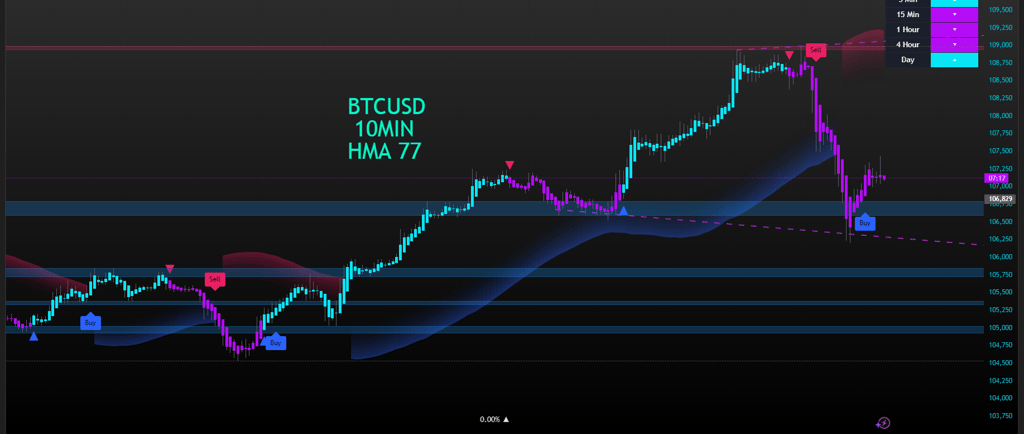
Crypto traders usually ask the wrong question first.
They ask, “What is the best crypto tradingview indicator?” when the real question is, “Best for what kind of trade, what timeframe, and what level of speed do you need on the chart?” That shift matters because crypto does not move like a calm market. It spikes, fakes out, trends hard, and reverses fast. If your indicator looks amazing in screenshots but falls apart in live conditions, it is not the best. It is just good marketing.
The best indicator for crypto on TradingView is the one that helps you make faster, clearer decisions without flooding your screen with noise. That means strong signals, clean visual structure, and no repainting tricks that make past trades look smarter than they really were.
What the best crypto TradingView indicator should actually do
A useful crypto indicator should answer three questions fast. Where is the trend? Where is the entry? Where is the risk?
If your setup cannot give you those answers within a few minutes, it is slowing you down. That is a problem in crypto, where hesitation can cost more than being slightly early.
The best crypto tradingview indicator is rarely just a single line or oscillator by itself. For most retail traders, a stronger setup combines multiple jobs inside one tool. You want signals, yes, but you also want context. That includes support and resistance zones, overbought and oversold areas, breakout structure, and some way to filter weak entries.
This is where many traders get stuck. They load RSI, MACD, moving averages, Bollinger Bands, volume tools, and trend lines all at once. The result is not better analysis. It is chart paralysis.
A high-quality indicator should reduce the amount of thinking you do under pressure. It should not remove responsibility, but it should absolutely remove clutter.
Why most crypto indicators disappoint traders
The biggest issue is not that indicators fail all the time. It is that traders often use tools built for general charting rather than live trading decisions.
A standard indicator can still be useful, but many of them only show one slice of the market. RSI can highlight momentum extremes, but it does not tell you whether price is running into a major support zone. Moving averages can show trend direction, but they often lag badly when crypto gets volatile. MACD can help with momentum shifts, but on lower timeframes it can produce plenty of late or messy signals.
Then there is the repainting problem. This is one of the fastest ways traders lose trust in a tool. On historical candles, the signal looks perfect. In real time, it appears, disappears, and changes after the move is already gone. That kind of indicator does not build confidence. It destroys it.
If you are serious about finding the best crypto tradingview indicator, start by ruling out anything that depends on hindsight to look accurate. Live market reliability beats backtested beauty every time.
A better way to judge indicators
Instead of asking whether an indicator is popular, ask whether it helps you execute.
A strong crypto indicator should be easy to read in motion. It should give you clear visual cues when the market is trending, compressing, or reaching an exhaustion area. It should also be flexible enough to fit different trader types. A beginner may want simple buy and sell support with clear zones. A more active trader may want aggressive entries and earlier alerts, knowing that some extra noise comes with the speed.
That trade-off matters. Faster indicators can catch more moves, but they can also create more false starts. Slower indicators may filter noise better, but they often give up a chunk of the move. There is no honest way around that.
So the best indicator is not always the one with the most signals. It is the one with signal quality that matches your style.
What serious crypto traders usually need in one indicator
For real chart work, crypto traders typically benefit most from a tool that combines several practical features into one clean system.
Non-repainted entry and exit signals matter because they help you trust what you are seeing in real time. Support and resistance zones matter because crypto reacts hard around key levels. Overbought and oversold channels matter because they help you avoid chasing late entries. Auto breakout trend lines matter because they can highlight pressure building before a move expands.
When those features live inside one indicator, the chart gets simpler, not harder. That is a major advantage for retail traders who want speed without sacrificing structure.
A lot of traders do not need twenty separate tools. They need one reliable framework that helps them spot high-probability setups faster.
The case for all-in-one indicators
This is where premium TradingView tools tend to stand out.
A well-built all-in-one indicator can give you a much more practical decision layer than basic free tools alone. You are not just watching one metric. You are reading market condition, entry timing, momentum, and trade location together.
That does not mean every premium indicator is worth it. Some are overpriced, overdesigned, or too confusing to use consistently. But a trader-built tool with clear settings, multiple trading modes, and visual decision support can save real time on every chart session.
For many retail traders, that is the difference between second-guessing and taking action.
A setup like the kind offered by TRBOALGO is built around that exact need. The value is not just in getting signals. The value is in seeing entries, exits, support and resistance, breakout conditions, and market extremes in one place, without paying subscription-style pricing every month.
How to tell if an indicator fits your trading style
You do not need the “best” indicator in theory. You need the best fit in practice.
If you scalp crypto, you probably need faster feedback and cleaner entry timing. You will care more about responsiveness, breakout structure, and quick confirmation. If you swing trade, you may care more about trend strength, major zones, and avoiding overtrading.
If you are newer, simple visual logic matters a lot. You should be able to look at the chart and understand why a signal is appearing. If the indicator feels like a black box that confuses you every time price speeds up, it is not helping enough.
Customization also matters more than many traders realize. Easy, basic, and aggressive modes can completely change how usable an indicator feels. Some traders want tighter filtering. Others want more opportunities. Good tools let you choose instead of forcing one style on everybody.
Free vs paid indicators for crypto
Free indicators are fine for learning. They are often the right place to begin. You can understand how trend, momentum, and volatility behave without spending money too early.
But once you are actively trading, free tools often create one of two problems. Either they are too basic, so you stack multiple indicators and overload your chart, or they are community scripts with inconsistent quality and limited support.
Paid indicators make sense when they solve a real problem. That might be signal clarity, non-repainting reliability, better chart organization, or faster market reading. A one-time payment model can be especially appealing if you want premium-style tools without adding another monthly bill to your trading routine.
That said, paying for an indicator will not fix weak discipline. No tool can do that. The indicator should improve your process, not replace it.
Red flags to avoid
If an indicator promises absurd win rates with no discussion of risk, be careful. If it looks perfect on old charts but gives vague rules in live conditions, be careful. If it floods every candle with arrows, clouds, labels, and colors until you can barely see price, be careful.
The best crypto tradingview indicator should make the chart easier to trade, not harder to decode.
Also pay attention to setup time. If it takes forever to configure or requires a long tutorial just to make basic sense, most retail traders will not use it consistently. And consistency is where results begin.
So what is the best crypto tradingview indicator?
For most traders, it is not a single old-school indicator used alone. It is a non-repainting, multi-feature TradingView indicator that combines signals with market structure and keeps the chart readable.
That is the real answer.
The best tool helps you spot opportunity fast, understand why the setup matters, and manage the trade with less confusion. It should support your style, not fight it. It should give you confidence without pretending losses disappear. And it should feel usable in live crypto conditions, not just on polished screenshots.
If your current setup feels slow, messy, or inconsistent, that is your signal to upgrade the way you read the market. Better tools do not guarantee profits. But they absolutely can help you make sharper decisions, faster - and that edge is worth taking seriously.
Enhance your trading with our NON REPAINTED premium indicators !
© 2026. TRBO algo .All rights reserved.
DISCLAIMER:Trading carries significant risks and may not be suitable for all investors. Leveraged trading has the potential to magnify both gains and losses, making it crucial to comprehend the risks associated with trading on margin fully. The information provided by TRBO Algo is intended for informational purposes only and should not be considered as financial advice. We strongly advise seeking guidance from qualified financial professionals before making any investment decisions.It is essential to recognize that trading outcomes are not guaranteed and carry inherent risks. By using our products and services, you agree that TRBO Algo will not be liable for any losses or damages that result from your investment choices. This disclaimer serves to clarify that we do not make any assurances or guarantees regarding investment success or profitability. You acknowledge and assume full responsibility for all trading decisions you make.