"One-time payment, own it forever" 10% off ! discount code -excl10

Best Forex Indicator for Beginners?
Looking for the best forex indicator for beginners? Learn which indicators actually help, what to avoid, and how to trade with more confidence.
3/19/20266 min read
Most beginners lose time before they lose money.
They open TradingView, add five indicators, change settings every ten minutes, and still have no real clue why price is moving. That is the real beginner problem in Forex - not a lack of indicators, but too many signals with no clear structure.
So what is the best forex indicator for beginners? The honest answer is simple: it is usually not one indicator by itself. The best starting point is an indicator that makes trend, momentum, and entry timing easier to read without flooding the chart or repainting signals after the fact.
That matters because beginners do not need more noise. They need faster clarity, cleaner charts, and tools that help them make decisions with confidence.
What makes the best forex indicator for beginners?
A beginner-friendly Forex indicator should do three things well. First, it should be easy to read at a glance. Second, it should support decision-making instead of replacing it. Third, it should behave consistently, especially in live market conditions.
This is where many new traders get trapped. An indicator can look amazing on historical charts and still be useless in real time. Repainting is a big reason why. If an indicator changes past signals after the candle closes, it creates a false sense of accuracy. For a beginner, that is dangerous because it teaches the wrong lesson.
The best forex indicator for beginners is one that helps answer the questions every trade starts with: Is the market trending or ranging? Is this area worth watching? Is momentum supporting the move? Is the setup late or still valid?
If your indicator cannot help with those questions, it is probably decoration.
Why moving averages are still the best place to start
If we are forced to name one classic indicator, the moving average is still the strongest candidate for most beginners.
That may sound boring, but boring is often profitable. A moving average helps smooth price action and gives new traders a cleaner view of direction. When price is trading above a rising moving average, the market is generally showing strength. When price is below a falling moving average, weakness is more obvious. That simple framework can stop beginners from taking random trades against the trend.
A 50 EMA or 200 EMA is common for a reason. These levels are widely watched, easy to understand, and useful across timeframes. They are not magical lines, and they will not call exact tops or bottoms. What they do offer is structure.
That said, moving averages have a trade-off. They lag. Since they are based on past price, they react after a move has already started. For beginners, this is not always a bad thing. A slight delay can filter impulsive trades. But if you rely on them alone, you may enter late or miss reversals entirely.
RSI is helpful, but beginners often misuse it
The Relative Strength Index, or RSI, is another strong option for beginners because it is simple to interpret. It measures momentum and can highlight overbought or oversold conditions.
The problem is not the tool. The problem is how beginners use it.
A lot of traders see RSI above 70 and instantly sell, or below 30 and instantly buy. That sounds logical until you watch a strong trend keep pushing in the same direction while RSI stays extreme. In trending markets, RSI can remain overbought or oversold longer than a beginner expects.
That is why RSI works better as a filter than a trigger. It can help you avoid chasing weak setups or confirm when momentum is fading near a key area. On its own, it is not enough. Paired with trend direction and support or resistance, it becomes much more useful.
Support and resistance beat fancy indicators
Here is the truth many beginners only learn later: support and resistance often matter more than most technical indicators.
Why? Because price reacts to levels. Buyers and sellers make decisions around obvious zones. If a beginner can identify where price has repeatedly stalled, bounced, or broken out, that skill creates a much stronger foundation than memorizing ten oscillator settings.
This is also why tools that automatically map support and resistance can be so practical. They speed up chart analysis and help newer traders spot high-interest zones without spending months trying to draw every line perfectly.
That does not mean every support and resistance tool is good. Some create clutter. Some mark too many weak zones. The best ones simplify the chart and help traders focus on areas that actually matter.
The real winner: a combined indicator setup
For most new traders, the best answer is not a single standalone indicator. It is a clean, combined setup that covers trend, levels, and timing in one view.
That is where beginner-friendly premium indicators often outperform pieced-together free tools. Instead of adding a moving average, then an RSI, then support and resistance, then breakout lines, then entry signals, a well-built all-in-one indicator can reduce chart chaos and speed up analysis.
This matters more than people think. Beginners do not just struggle with strategy. They struggle with hesitation. When charts are overloaded, decisions get slower, confidence drops, and trades become emotional.
A smarter indicator setup should help traders quickly identify trend direction, key zones, breakout opportunities, and possible entry or exit conditions. It should also avoid repainting, because signal stability matters far more than flashy visuals.
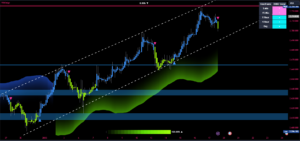
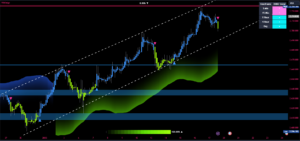
That is one reason many traders look for TradingView tools that combine non-repainting signals, support and resistance zones, overbought and oversold channels, and breakout structure in a more guided format. A tool like that fits how beginners actually trade - they want speed, clarity, and less second-guessing.
How beginners should choose an indicator
Start with a simple question: does this indicator help you make one clear decision better?
If the answer is vague, skip it.
A good beginner indicator should reduce confusion, not create a dependency. You should be able to explain what it does in one sentence. If you cannot, you probably should not trade with it yet.
Look for a few specific qualities. It should be visually clear, easy to customize, and useful on the market you actually trade. It should also fit your pace. A scalper, swing trader, and day trader will not use the same settings or timeframes.
And most importantly, test how it behaves in live conditions. Historical screenshots can be seductive. Real-time performance tells the truth.
What to avoid when searching for the best forex indicator for beginners
Avoid anything that promises perfect entries. That is usually the fastest route to bad habits.
Also avoid stacking too many indicators that all tell you the same thing. A MACD, RSI, and stochastic can all end up repeating momentum information in slightly different forms. That makes the chart look advanced, but it does not always make decisions better.
Be careful with indicators that repaint, overly aggressive signal generators, or tools with settings so complex that you are constantly adjusting them after every losing trade. Beginners need consistency before optimization.
There is also a mindset trap here. Many new traders think the next indicator will fix their discipline problem. It will not. A better tool can improve chart reading and save time, but it cannot protect you from overtrading, revenge trading, or ignoring risk.
A practical beginner setup that actually makes sense
If you want a straightforward starting point, use one trend filter, one level-based tool, and one signal or momentum confirmation.
For example, a moving average can help define direction. Support and resistance zones can identify where price is likely to react. Then a momentum or entry signal can help with timing. That is enough for most beginners to build a repeatable process.
This kind of setup is strong because each part has a job. The trend filter keeps you aligned with market direction. The zones show where to pay attention. The timing tool helps avoid jumping in too early.
That is also why many retail traders prefer indicator bundles built for TradingView. Instead of patching together separate tools, they get a more complete view that is faster to read and easier to trust. TRBOALGO, for example, focuses on exactly that kind of trader-first setup with non-repainting signals and chart tools designed to cut through analysis overload.
So which indicator should a beginner trust first?
If you want the most classic answer, start with a moving average.
If you want the most practical answer, trust a clean system over a single indicator.
The best beginner indicator is the one that helps you read market structure quickly, supports your confidence, and stays honest in live conditions. That usually means simple trend guidance, clear key levels, and non-repainting signal support working together.
Beginners do not need a magic formula. They need a tool that helps them stop guessing and start reading the chart with purpose. Pick the setup that gives you clarity, stick with it long enough to learn its behavior, and let your edge come from consistency instead of constant switching.
Enhance your trading with our NON REPAINTED premium indicators !
© 2026. TRBO algo .All rights reserved.
DISCLAIMER:Trading carries significant risks and may not be suitable for all investors. Leveraged trading has the potential to magnify both gains and losses, making it crucial to comprehend the risks associated with trading on margin fully. The information provided by TRBO Algo is intended for informational purposes only and should not be considered as financial advice. We strongly advise seeking guidance from qualified financial professionals before making any investment decisions.It is essential to recognize that trading outcomes are not guaranteed and carry inherent risks. By using our products and services, you agree that TRBO Algo will not be liable for any losses or damages that result from your investment choices. This disclaimer serves to clarify that we do not make any assurances or guarantees regarding investment success or profitability. You acknowledge and assume full responsibility for all trading decisions you make.