"One-time payment, own it forever" 10% off ! discount code -excl10

Best Stock Trading View Indicator trboalgo
Looking for the best stock tradingview indicator? Learn what actually matters, what to avoid, and how to pick a tool that fits your style.
3/19/20266 min read
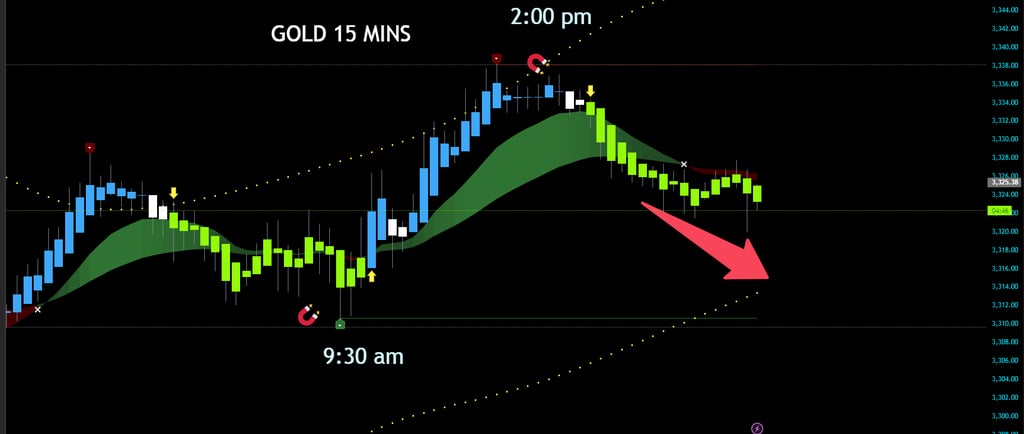
If you have ever loaded a stock chart with five indicators, three oscillators, and a trend tool that looked amazing in hindsight but failed in real time, you already know the problem. The search for the best stock tradingview indicator is usually not about finding more data. It is about finding a cleaner edge.
That is where most traders get stuck. They think the answer is a magic script, a secret setting, or a popular indicator everyone else is using. But stocks do not reward crowded charts. They reward clear decisions, fast reads, and tools that help you act without second-guessing every candle.
What makes the best stock TradingView indicator
The best stock TradingView indicator is not the one with the most features. It is the one that helps you read trend, momentum, key levels, and entry timing without creating noise.
For stock traders, that usually means four things matter most. First, the indicator should be easy to interpret at a glance. Second, it should behave consistently across different market conditions. Third, it should avoid repainting if it gives signals. Fourth, it should fit your trading style instead of forcing you to trade someone else’s strategy.
This is where many free indicators fall apart. On historical charts, they can look almost perfect. In live trading, they lag, repaint, or flood the chart with signals that have no context. A tool that looks smart after the move is not helping you when real money is on the line.
Why there is no single best stock tradingview indicator for everyone
Here is the truth traders need to hear. There is no universal best stock tradingview indicator for every trader, every stock, and every timeframe.
A swing trader scanning daily charts for breakout continuation setups needs something different than a day trader watching five-minute momentum names at the open. A beginner may need cleaner visual guidance and fewer settings. A more experienced trader may want layered information, tighter customization, and confirmation tools that support an existing process.
So the better question is not, what is the best indicator overall? The better question is, what is the best indicator for the way you trade stocks?
That shift matters. It saves you from chasing flashy scripts and helps you judge indicators on what they actually do for your decision-making.
The indicator traits that actually help stock traders
A useful stock indicator on TradingView should simplify the chart, not compete with it. That means visual clarity matters more than novelty.
Trend recognition is one of the first things to look for. If an indicator cannot help you quickly identify whether a stock is trending, chopping, or rolling over, it is already slowing you down. Stocks often move in phases, and catching the right phase is more valuable than spotting every tiny move.
Support and resistance mapping is also a big deal. Stocks react around prior highs, lows, range boundaries, and breakout zones. Indicators that automatically mark these areas can save time and reduce missed setups, especially when you scan multiple charts each day.
Momentum and exhaustion signals can help too, but only when they are not used in isolation. An overbought reading in a strong uptrend does not always mean sell. An oversold reading in a weak stock does not automatically mean buy. Good indicators treat these conditions as context, not commands.
Then there is signal quality. If an indicator provides buy and sell alerts, those alerts need to make sense with the structure of the chart. Strong tools do not just fire constantly. They filter. They give traders a way to focus on better locations instead of more locations.
Best stock TradingView indicator setups usually combine functions
Most stock traders do not need ten separate indicators. They need one well-built system or a tight combination of tools that covers the basics.
That is why all-in-one TradingView indicators have become popular. A strong bundled tool can combine entries and exits, support and resistance zones, breakout structure, trend guidance, and overbought or oversold areas in one place. That creates speed. And speed matters when you are scanning charts before the open, during market hours, or when earnings-driven momentum starts moving fast.
The trade-off is that not every all-in-one indicator is built well. Some become cluttered. Others try to do everything and end up weak at the jobs that matter most. So if you go this route, the question is simple. Does it help you act faster with more confidence, or does it just add more color to the chart?
For many retail traders, the best fit is a non-repainting indicator with a clean layout and flexible modes. That balance gives newer traders structure while still giving more active traders room to tune signals based on risk tolerance and market conditions.
What to avoid when choosing the best stock tradingview indicator
The biggest red flag is repainting. If signals shift after the candle closes or disappear once the chart updates, your backtest is lying to you. That kind of tool may look impressive in screenshots, but it can wreck confidence in live trading.
The second red flag is complexity without purpose. More settings do not mean better results. If you need a manual just to understand what the indicator is saying, it is probably not improving execution.
The third issue is signal overload. Some indicators throw alerts on every tiny move, especially in choppy stocks. That creates emotional trading. You stop waiting for quality setups and start reacting to noise.
Another problem is using indicators that ignore stock behavior. Stocks have gaps, earnings reactions, sector rotations, and strong reactions around obvious levels. If a tool was not built with real chart behavior in mind, it may perform poorly when volatility changes.
How to choose the right indicator for your stock trading style
If you are newer to stocks, keep it simple. Look for an indicator that shows trend direction clearly, marks support and resistance, and gives non-repainting entry and exit guidance. That kind of structure can cut down hesitation and help you avoid random trades.
If you are an intermediate trader, focus on confirmation and speed. You probably already understand chart patterns and levels. What you need is a tool that helps you validate setups faster, manage risk more efficiently, and avoid low-quality entries.
If you trade breakouts, prioritize indicators that identify trend lines, breakout zones, and momentum expansion. If you trade pullbacks, look for tools that help you track trend strength and oversold conditions inside an existing move. If you trade reversals, support and resistance plus momentum exhaustion will matter more.
This is also where customization becomes valuable. A good indicator should let you adjust sensitivity or trading mode based on the market. Aggressive settings may suit fast intraday action. More conservative settings may work better for swing trades and cleaner confirmations.
A smart way to judge any stock indicator on TradingView
Before trusting any indicator, watch how it behaves in live or recent charts. Do not judge it only by perfect historical examples. See how it handles ranging conditions, fake breakouts, trend continuation, and sudden reversals.
Ask practical questions. Does the indicator help you identify the setup faster than your current method? Does it reduce hesitation? Does it help you stay out of weak trades? Can you explain its signals in plain English?
That last one matters more than people think. If you cannot explain why an indicator is showing a buy or sell condition, you are not really using a system. You are borrowing confidence from a script.
A strong tool should support your decisions, not replace them. That is how confident traders actually use indicators.
Where premium indicators can make a real difference
Free tools can be useful, but premium indicators often stand out in the details. Better visual design, stronger filtering, cleaner alerts, and more practical combinations of features can make a big difference when you trade regularly.
That is especially true for traders who want a one-time purchase instead of another monthly subscription. A trader-built indicator package that combines support and resistance, breakout trend lines, overbought and oversold channels, and non-repainting signals can save time every single session. That is the real value - not just more features, but faster chart reading and more confidence when a setup appears.
That is exactly why traders look at solutions from brands like TRBOALGO. The appeal is simple. You get practical TradingView tools built for real decision-making, not just flashy screenshots.
The best stock TradingView indicator is the one that helps you see the market clearly, trust what you are looking at, and act without dragging your chart into confusion. If your current setup feels crowded, inconsistent, or hard to trust, that is your sign to simplify and choose a tool that works as hard as you do.
Enhance your trading with our NON REPAINTED premium indicators !
© 2026. TRBO algo .All rights reserved.
DISCLAIMER:Trading carries significant risks and may not be suitable for all investors. Leveraged trading has the potential to magnify both gains and losses, making it crucial to comprehend the risks associated with trading on margin fully. The information provided by TRBO Algo is intended for informational purposes only and should not be considered as financial advice. We strongly advise seeking guidance from qualified financial professionals before making any investment decisions.It is essential to recognize that trading outcomes are not guaranteed and carry inherent risks. By using our products and services, you agree that TRBO Algo will not be liable for any losses or damages that result from your investment choices. This disclaimer serves to clarify that we do not make any assurances or guarantees regarding investment success or profitability. You acknowledge and assume full responsibility for all trading decisions you make.