"One-time payment, own it forever" 10% off ! discount code -excl10

How an Entry and Exit Indicator Helps
See how an entry and exit indicator helps traders spot setups faster, avoid repainting traps, and make clearer decisions in Forex, crypto, and stocks.
3/21/20265 min read

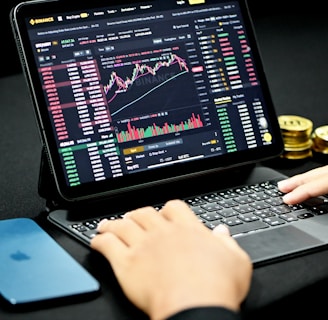
The chart looks clean until the market starts moving fast. Then every candle feels urgent, every signal feels tempting, and hesitation gets expensive. That is exactly where an entry and exit indicator can change the game. It gives traders a faster way to read price action, filter noise, and act with more confidence instead of second-guessing every move.
For retail traders, the real problem is not access to data. There is too much of it. Indicators stack up, charts get crowded, and decision-making slows down right when speed matters most. A good tool does not just add more information. It cuts through confusion and shows you where opportunity may actually be forming.
What an entry and exit indicator actually does
At its core, an entry and exit indicator is built to answer two practical questions. When does a trade setup look strong enough to consider entering, and when does that setup start losing quality or reach a logical point to close? That sounds simple, but in live markets it is where most traders struggle.
Many traders can spot a trend after it is obvious. Fewer can identify a high-probability setup early enough to act without chasing. Even fewer know when to close without giving back too much profit or exiting too early. That is why entry and exit tools matter. They reduce lag in decision-making.
The best versions do more than flash buy and sell markers. They combine signal logic with context. That can include support and resistance zones, overbought and oversold conditions, breakout structure, and trend behavior. The goal is not to predict every move. The goal is to help traders make better decisions in real time.
Why traders keep searching for a better entry and exit indicator
Most traders do not need more chart decorations. They need fewer false starts.
A weak indicator can create the illusion of precision. It may look accurate in hindsight but fail badly in live conditions. That usually happens for one of two reasons. Either the logic is too basic for real market behavior, or the signal repaints and shifts after the fact. That is a serious issue because it gives traders false confidence.
A better entry and exit indicator should help with three things. First, it should speed up analysis so you can recognize setups within minutes, not after the move is gone. Second, it should support consistency by applying the same logic across Forex, crypto, or stocks. Third, it should help reduce emotional trading by giving structure to the process.
That does not mean any indicator should be followed blindly. Markets still change. Volatility still expands. News still breaks patterns. But a strong signal tool can keep traders from making random decisions based on fear, boredom, or FOMO.
The difference between useful signals and noisy signals
This is where trade-offs matter.
An indicator that fires signals constantly may feel exciting, especially to beginners. More alerts can look like more opportunity. In reality, too many signals often mean lower quality. You end up taking mediocre setups because the tool makes it feel like something is always happening.
On the other hand, a very strict indicator may deliver cleaner setups but fewer of them. That can be a better fit for traders who value patience and want stronger confirmation before entering. Neither approach is automatically best. It depends on your style, timeframe, and tolerance for drawdown.
A useful signal usually has context behind it. Maybe price is bouncing from a key zone. Maybe momentum is shifting after a pullback in trend. Maybe a breakout is forming with structure instead of random spikes. When an indicator reflects that kind of logic, it becomes more than a visual shortcut. It becomes a decision support tool.
What to look for in an entry and exit indicator
If you trade on TradingView, the first thing to watch for is signal integrity. Non-repainting logic matters because you need signals that stay honest after the candle closes. If an indicator changes old signals later, it becomes hard to trust anything on the chart.
The next factor is clarity. Good tools should make charts easier to read, not harder. If the screen fills with conflicting markers, labels, and colors, you are back to the same overload problem. Simplicity is a strength when it helps you act faster.
Customization matters too. Newer traders may want an easier mode with more guidance. More experienced traders may prefer basic or aggressive settings depending on market conditions. That flexibility is valuable because one fixed sensitivity does not fit every asset or session.
You should also pay attention to whether the indicator works with supporting features that add context. Support and resistance zones, breakout trend lines, and overbought or oversold channels can help confirm whether an entry signal has room to run or is showing up in a dangerous area.
Why one signal alone is rarely enough
This is the part many traders learn the hard way. An entry signal is not the same as a complete trade plan.
A strong setup still needs context around risk. Where is invalidation? Is the trade going into nearby resistance? Is volume thin? Are you trading during a dead session or in high volatility? The indicator may point to an opportunity, but execution still depends on the trader.
That is why the smartest use of an entry and exit indicator is as a structured layer inside a broader process. Let the signal show you where to focus. Then check whether market structure supports it. That simple step can improve decision quality fast.
For beginners, this structure builds confidence. For intermediate traders, it improves speed. Instead of scanning endless possibilities, you spend your time evaluating the setups that actually deserve attention.
Entry and exit indicator use across Forex, crypto, and stocks
Different markets move differently, but the need is the same. Traders want clean entries, logical exits, and less hesitation.
In Forex, timing matters because intraday moves can be efficient and fast. A signal that aligns with trend and key levels can help reduce overtrading in pairs that chop for long periods. In crypto, volatility is the bigger issue. An indicator needs to handle sudden expansion without turning every spike into a trade invitation. In stocks, especially around the open, clean structure and fast confirmation become essential because momentum can shift quickly.
That is why flexibility matters more than hype. A tool should adapt to the chart, not force traders into one rigid method. Some sessions call for patience. Some call for aggressive breakout logic. Some call for standing aside. The best indicators support that reality instead of pretending every candle is a setup.
How traders actually get value from these tools
The biggest benefit is not magic prediction. It is faster pattern recognition.
When you can identify a setup within a few minutes instead of overanalyzing for half an hour, your execution improves. You become less reactive. You stop chasing candles that already moved. You also start building consistency because the same visual logic appears again and again across charts.
That consistency matters more than most traders realize. Confidence does not come from winning every trade. It comes from knowing why you entered, why you exited, and whether the setup matched your rules. An indicator that supports that process can become a serious advantage.
This is exactly why trader-built tools have become so popular. Retail traders want professional-looking analysis without spending hours building systems from scratch. They want chart support that feels usable right away, not complicated software that creates more friction. A practical solution from a brand like TRBOALGO fits that need because it focuses on speed, clarity, and non-repainting signal support without locking traders into a subscription model.
The real standard: better decisions, not perfect trades
If you are evaluating any entry and exit indicator, forget the fantasy of perfect win rates. That is not the standard. The real standard is whether the tool helps you make clearer, faster, more disciplined decisions.
Does it reduce chart clutter? Does it help you spot high-probability setups sooner? Does it stay reliable after the candle closes? Does it support your trading style instead of fighting it? Those are the questions that matter.
A strong indicator will not remove risk. Nothing will. But it can reduce confusion, sharpen your timing, and help you trade with more control. For retail traders trying to move beyond guesswork, that is not a small upgrade. It is often the shift that turns random chart watching into a repeatable process.
Choose tools that help you see the market clearly, then let your rules do the rest. That is how confidence gets built trade by trade.
Enhance your trading with our NON REPAINTED premium indicators !
© 2026. TRBO algo .All rights reserved.
DISCLAIMER:Trading carries significant risks and may not be suitable for all investors. Leveraged trading has the potential to magnify both gains and losses, making it crucial to comprehend the risks associated with trading on margin fully. The information provided by TRBO Algo is intended for informational purposes only and should not be considered as financial advice. We strongly advise seeking guidance from qualified financial professionals before making any investment decisions.It is essential to recognize that trading outcomes are not guaranteed and carry inherent risks. By using our products and services, you agree that TRBO Algo will not be liable for any losses or damages that result from your investment choices. This disclaimer serves to clarify that we do not make any assurances or guarantees regarding investment success or profitability. You acknowledge and assume full responsibility for all trading decisions you make.