"One-time payment, own it forever" 10% off ! discount code -excl10

Online Trading Without the Usual Noise
Online trading can be fast, clear, and more confident when you use better tools, cleaner charts, and a repeatable process for entries and exits.
3/21/20266 min read
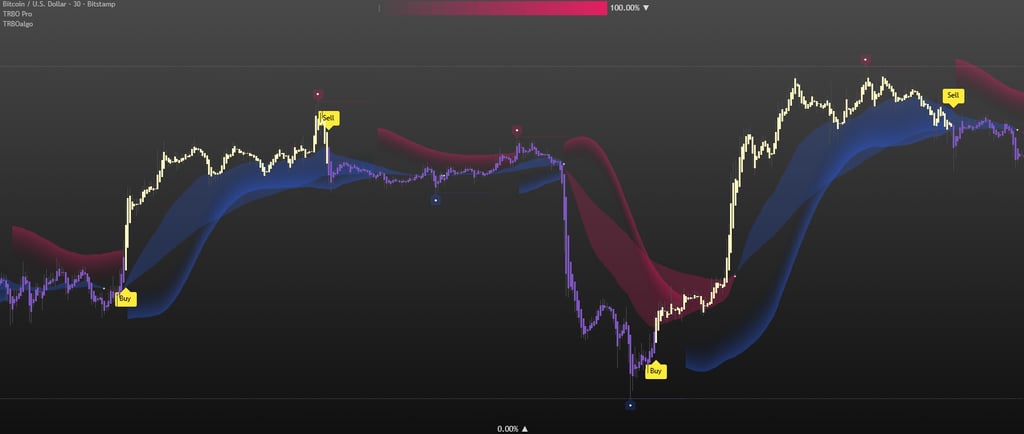
Most people get into online trading because they want freedom. Then the reality hits - too many charts, too many indicators, too many opinions, and not nearly enough clarity when real money is on the line. That is where traders either level up or keep bouncing between random setups that never become a real system.
The truth is simple. Online trading is not just buying and selling from a laptop or phone. It is decision-making under pressure. If your chart is messy, your signals repaint, or your strategy changes every week, you are not trading with an edge. You are reacting. And reaction trading gets expensive fast.
For retail traders in Forex, crypto, and stocks, the goal is not to make trading look complicated. The goal is to make it readable. Fast. Clear. Repeatable. That is how you stop second-guessing and start acting with more confidence.
What online trading really demands
Online trading moves fast, but speed alone is not the advantage. Clean interpretation is. Markets reward traders who can filter noise, spot structure, and make decisions without freezing at the key moment.
That sounds obvious, but a lot of traders still build their process backward. They start by searching for a magic indicator, a hot strategy, or a social media setup that worked for someone else. Then they stack tool on top of tool until the chart becomes impossible to read. Instead of confidence, they get confusion.
A stronger approach starts with a smaller question: what do you actually need to see before entering a trade? For most traders, it comes down to trend direction, key support and resistance areas, momentum extremes, and a clear entry and exit framework. If your setup cannot show those things quickly, it is slowing you down instead of helping.
This is why practical chart tools matter. Not because indicators trade for you, but because better tools reduce hesitation. They help you identify high-probability zones faster and stay more consistent from one session to the next.
Why so many traders struggle with online trading
The biggest problem is not always lack of effort. It is lack of structure. Newer traders often jump between strategies because they have not yet found a framework they can trust. More experienced traders run into a different issue - they know enough to see multiple possibilities on every chart, which can create overanalysis and late entries.
There are also technical problems that hurt decision quality. Repainting signals are a big one. If an indicator shows a perfect setup after the move already happened, it gives a false sense of accuracy. That kind of tool does not build confidence. It destroys it. If you want to understand why this matters so much, read What Makes a Non Repaint Trading Indicator.
Another issue is indicator overload. Traders add momentum tools, oscillators, moving averages, trend filters, and volume studies all at once, hoping more confirmation will create better trades. Usually it creates delay. By the time every tool agrees, the move is already gone or the risk-to-reward no longer makes sense.
The best online trading setups are usually the clearest ones. Not empty charts, but organized charts. You want tools that answer specific questions instead of shouting ten different things at once.
The tools that actually make online trading easier
A useful trading setup should help you do three things well: spot opportunity, time the entry, and manage the exit. If it cannot support all three, it is incomplete.
Start with structure. Support and resistance zones still matter because price reacts to areas, not just lines. When you can quickly identify where buyers or sellers previously stepped in, the chart becomes more logical. You stop chasing moves in the middle of nowhere and start paying attention to places where reactions are more likely. That is a major shift in how online trading feels from one session to another.
Next comes timing. This is where entry and exit signals can save time, especially for traders who want faster decisions without manually measuring every move. A good signal tool should not replace your judgment, but it should make your process more efficient. It should help you see when momentum and structure align instead of forcing you to guess. If you want a deeper breakdown, How an Entry and Exit Indicator Helps covers the practical side.
Then there is context. Overbought and oversold channels, breakout trend lines, and trend-following modes all help answer a different question: is price stretched, compressing, or ready to move? That context matters because the same buy signal means something very different near resistance than it does after a clean breakout.
This is why smarter traders use tool combinations, not tool piles. You want a setup where each feature has a job. One helps define zones. One helps flag signals. One helps show momentum or exhaustion. Together they support a process that is fast enough for active markets and simple enough to repeat.
Online trading is easier when your process is repeatable
A repeatable process beats random brilliance. Every time.
That does not mean every trade wins. It means your entries are based on the same logic, your exits follow the same plan, and your risk is not being reinvented with every candle. This is what helps both beginners and intermediate traders move from emotional trading to controlled execution.
A strong process can be as straightforward as this: identify the trend, mark the zone, wait for a signal, confirm momentum, and define the invalidation point before entering. That is not flashy, but it is powerful because it can be repeated across Forex pairs, crypto charts, and stocks without turning your screen into chaos.
The more repeatable your process becomes, the more you can evaluate what is actually working. You can track whether your entries are late, whether your exits are too early, or whether certain market conditions fit your setup better than others. Without consistency, there is nothing to measure. And if there is nothing to measure, improvement stays random.
The beginner mistake and the intermediate mistake
Beginners usually think the problem is not having enough indicators. Intermediate traders often think the problem is not having enough precision. Both can end up in the same place - missed trades, late trades, and low confidence.
For beginners, the better move is usually simplicity with guidance. Use tools that clearly show entries, exits, and major zones so you can learn chart behavior without drowning in complexity. The fastest progress often comes from removing friction, not adding more theory.
For intermediate traders, the edge often comes from speed and refinement. If you already understand market structure, then tools that highlight breakout areas, support and resistance, or non-repainted signals can help you act faster on setups you already recognize. That is where efficiency turns into opportunity.
This is also why one-size-fits-all trading advice rarely works. A scalper, swing trader, and breakout trader do not need the exact same setup. The chart tools should match the style. Aggressive traders may want faster signals and quicker reactions. More conservative traders may prefer stronger confirmation and cleaner zone-based entries.
Choosing tools for Forex, crypto, and stocks
Online trading looks different depending on the market, but the core needs stay surprisingly similar. You still need structure, timing, and confidence.
Forex traders often need cleaner trend reading and reliable zone-based entries because sessions, liquidity, and timing matter so much. Crypto traders need tools that can handle volatility without constantly faking out signals. Stock traders usually benefit from setups that help them quickly identify trend continuation, pullbacks, and breakout opportunities across multiple tickers.
That is why chart customization matters. The best tools are not just accurate. They are usable. They let you adjust how aggressively you want to trade, what confirmations you care about most, and how much visual information you want on the chart.
For traders using TradingView, this matters even more. The platform is powerful, but it is easy to overload your layout. A smart indicator package should reduce friction, not create it. It should help you scan charts faster, understand price action faster, and act faster when a valid setup appears. If that is your focus, Algo Trading for Faster, Smarter Setups is worth reading.
What better online trading looks like in practice
Better online trading does not mean predicting every move. It means showing up with a chart that makes sense, a process you trust, and tools that support action instead of confusion.
That is where trader-built indicators can make a real difference. Features like non-repainted signals, support and resistance zones, breakout detection, and adjustable trading modes are not just nice extras. They solve common pain points that keep retail traders stuck. They help cut down hesitation, reduce chart clutter, and make it easier to find setups within minutes instead of hunting for them all day.
TRBOALGO is built around that exact idea - giving retail traders practical TradingView tools that feel premium without forcing them into expensive subscriptions. That matters because access should not be the barrier. Execution should be the focus.
If you are serious about online trading, stop asking how many indicators you can add. Ask whether your current setup helps you read the market faster, trust your signals more, and stay consistent when the pressure is on. That is the kind of edge that actually changes results.
Enhance your trading with our NON REPAINTED premium indicators !
© 2026. TRBO algo .All rights reserved.
DISCLAIMER:Trading carries significant risks and may not be suitable for all investors. Leveraged trading has the potential to magnify both gains and losses, making it crucial to comprehend the risks associated with trading on margin fully. The information provided by TRBO Algo is intended for informational purposes only and should not be considered as financial advice. We strongly advise seeking guidance from qualified financial professionals before making any investment decisions.It is essential to recognize that trading outcomes are not guaranteed and carry inherent risks. By using our products and services, you agree that TRBO Algo will not be liable for any losses or damages that result from your investment choices. This disclaimer serves to clarify that we do not make any assurances or guarantees regarding investment success or profitability. You acknowledge and assume full responsibility for all trading decisions you make.